



HIYED CIC
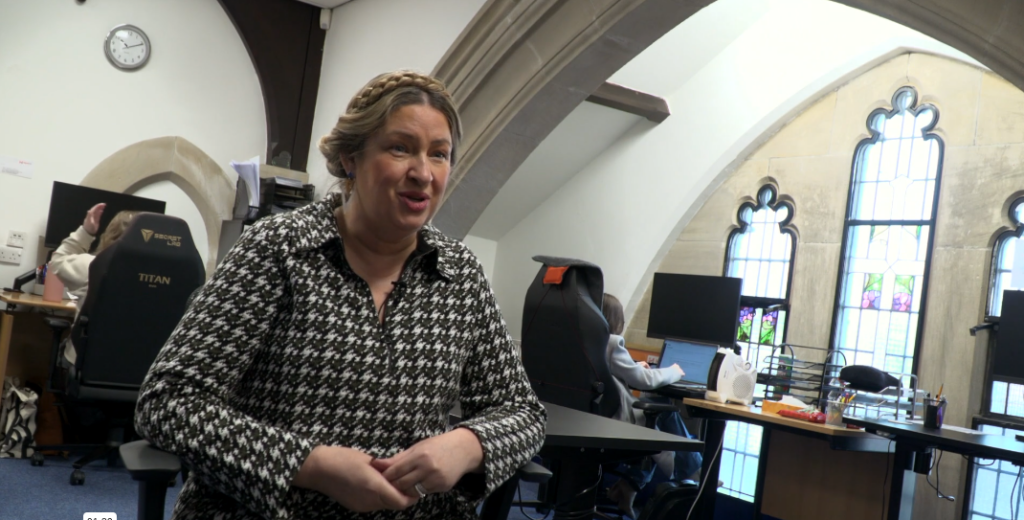
Meet Tracy and Gary Fee, founders of HIYED CIC, a social enterprise supporting neurodivergent and disabled people into meaningful work. Built on decades of experience in mental health and supported employment, HIYED grew from Tracy’s own late autism diagnosis and a belief that a diagnosis should never be a barrier to employment.
With support from Durham Startups, alongside organisations including Point North and the North East BIC, the team launched in November 2023 and quickly began making a difference. “No matter what diagnosis you have, it doesn’t disable you from getting a job.”
-
View transcript
**[Narrator]** In the UK, one in seven of us are neurodivergent. The way our brains function, the way we learn, the way we process information is different.
**[Henry]** …with my feelings, having autism, it’s just about seeing the world differently. So like, you feel isolated from people, or you feel like you’re on different wavelengths.
**[Tracy]** Although I’d had a successful career, it had caused lots of anxiety and lots of upset along the way that I think would’ve been avoided if I’d have known.
The most important thing to remember is no matter what diagnosis you have, it doesn’t disable you from getting a job.
**[Narrator]** That message has been Hiyed’s battle cry since it was launched by Tracy and Gary Fee in November 2023. But the business had been years in the making. Tracy was a mental health nurse working for the NHS for 30 years.
**[Tracy]** I’ve always been involved in that supported employment arena, and really seeing the difference that that makes to people’s mental health — the resilience that having a job offers. Always wanted to set up my own business, but it was scary. And then, um, a couple of years ago I was diagnosed autistic myself, and that made sense of some of the difficulties that I’d had in work. And the momentum just seemed to grow and grow and grow until I couldn’t ignore it. And it was kind of a now-or-never moment, really.
**[Narrator]** Thanks to the support of Durham Startups and organisations such as Point North and the North East BIC, Hiyed is making a big impact on the here and now.
**[Tracy]** We work with disabled people who are of working age, who are wanting to get into work but are maybe facing a barrier around maybe never worked before or had bad experiences, and need some job coaching to get into work.
**[Narrator]** Jessica works in the cafe in the McIntyre Centre, which was opened in late 2024 by Bishop Auckland College to provide, amongst other things, training opportunities in hospitality. She’s one of two people there supported by Hiyed.
**[Jessica]** Hiyed is a nice organisation in Bishop Auckland where they help, um, people like me who have — have autism myself. I love to help out as much as I can, and I always look on the bright side of things and always do my best with my best effort.
**[Interviewer]** And what do you feel when you come to work? How much do you enjoy it?
**[Jessica]** Oh, it’s an absolute wonder. Enjoy like working here at McIntyre — it’s just like all smiles around, and, um, always happy to go with the flow and just always do my best.
**[Narrator]** In its first two years, Hiyed provided supported internship work for more than 40 young people with additional needs, helped 20 adults launch their own businesses, and assisted nearly 150 others referred to the company by job centres in securing paid employment.
Henry is one of more than 40 people working for Hiyed. His job is to help improve health professionals’ understanding of autism and learning disabilities.
**[Henry]** I really enjoy what I do. Obviously my family are proud. I’m proud because it’s my first job, like first paid employment. I just like doing it ’cause like — ’cause I’ve got autism myself, so I just know that I’m like helping the world become a better place and like more comfortable.
I feel like there’s, um, a stereotype for autism. So if an employer sees it on a CV or something, then they might — they’re probably more likely, like as bad as it sounds, like more likely to take like a job offer off someone who hasn’t got it, ’cause they think that like we’re less able to do the job. But like actually, the manner is just fine. [unclear]
**[Narrator]** Josh wanted to be a tattoo artist from the age of 10, and Hiyed has helped him achieve his dream.
**[Josh]** I don’t have any formal diagnosis or anything. Uh, a lot of people assume that I probably do, and I guess as well both of my apprentices have autism and one also has ADHD, so it helps me understand their needs a little bit more. But also I try to cater to people who are neurodiverse and who are, you know, have disabilities and stuff. I’ve tried to make an environment that everyone can feel safe and comfortable in, which in tattooing isn’t always given.
**[Interviewer]** What would you say to Tracy and the team at Hiyed for the support that they’ve given you?
**[Josh]** I mean, I couldn’t thank them enough. I mean, like, they’ve also — they’re also like helping my sister. Basically my whole family is with Hiyed now. Um, they are an incredible company, and Tracy and Gary, they are all just such wonderful people.
**[Narrator]** That opinion was shared by the judges of the 2025 National Small Business Awards, which named Hiyed Business Hero of the Year.
**[Tracy]** I’m so proud — so proud of everybody and, um, of myself as well, which I don’t often say. Um, but yeah, we’re doing something really special, I think.